


New Poison Centre obligations in Belgium and Switzerland from 2026
Regulatory key points for hazardous mixture notification under CLP and ChemO
Chemical companies will face important Poison Centre changes from 1 January 2026. Belgium and Switzerland are introducing new requirements affecting manufacturers and importers.
Belgium: new fee system for CLP notification (Annex VIII)
From 2026, Belgium will apply a different fee model for hazardous mixture notifications. The change directly impacts the Poison Centre system under the CLP Regulation, Article 45.
The individual fee per mixture will disappear. It will be replaced by an annual tariff based on the total number of notifications submitted. This approach may reduce costs for large product catalogues. It also simplifies administrative management for broad portfolios.
Belgium: deferred invoicing and indefinite validity
Notifications submitted during 2026 will be invoiced in 2027. The responsible authority will be the FPS Public Health.
The tariff will remain valid as long as the mixture does not change. If the composition is modified, a new CLP notification will be required.
Late payment will incur a 20% surcharge. It is advisable to plan the financial calendar in advance.
Belgium: mandatory deadline before placing on the market
The Belgian Royal Decree sets a strict requirement. Information must be transmitted no later than 48 hours before placing the mixture on the market. This deadline is an additional national obligation. Companies must integrate it into their internal launch processes.
Switzerland: mandatory RPC notification from January 2026
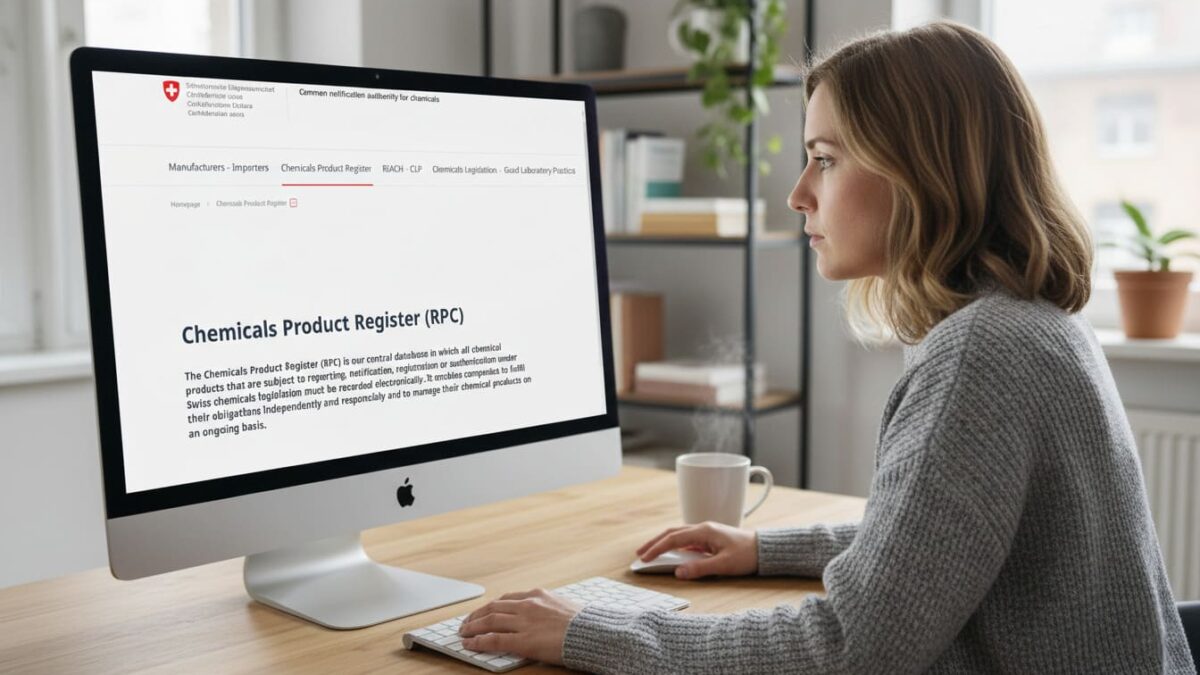
Switzerland will require hazardous mixtures to be notified through the Notification Switzerland (RPC) system. It works in a similar way to the EU PCN, but under national legislation.
The legal basis is the Chemicals Ordinance (ChemO). The aim is to improve responses to poisonings and chemical emergencies. There are no general volume exemptions. Most hazardous mixtures will have to be notified.
Who is affected by the Swiss notification?
The obligation applies to manufacturers and importers placing products on the Swiss market. It also affects foreign companies without a Swiss establishment. In that case, a Swiss commercial representative must be appointed. This is essential to comply correctly with the RPC.
Information required in the Swiss RPC
Swiss notification requires structured and complete data. It must include:
- Product identification and a UFI valid in Switzerland.
- Use category: consumer, professional or industrial.
- Annual volume placed on the market.
- Detailed composition and concentration ranges.
- Classification and labelling under Swiss rules.
- Intended use and product function.
Consistency with the SDS and the label is essential. Errors may lead to regulatory rejections.
Differences between EU PCN and Swiss RPC
Although aligned, there are important differences.
- Notification is not submitted through the ECHA portal.
- The UFI must be managed under specific Swiss requirements.
- In addition, the legal framework is national, not EU-wide.
Companies already compliant with EU PCN should review their processes. Compliance in the EU does not guarantee automatic compliance in Switzerland.
Strategic preparation for 2026
The changes in Belgium and Switzerland strengthen oversight of hazardous mixtures. Early planning helps avoid delays and penalties.
Poison Centre notification will be a central element of chemical compliance in 2026. Adapting in time will be key to maintaining market access.
Do you need support to notify your hazardous mixtures to the ECHA Poison Centre or the Swiss RPC? Nordiik can help — contact us!
Source: RPC